
In early 2026, many gamers and PC builders noticed something unusual when checking component prices. RAM, which had been steadily becoming more affordable over the past few years, suddenly began to rise again.
Industry data show that global DRAM prices increased by more than 180 per cent in Q1 2026 compared with Q4 2025. Analysts warn that the DRAM shortage may persist through the second half of 2027, driven by unprecedented demand for artificial intelligence infrastructure.
For gamers, creators, and professionals building custom gaming PCs, this shift matters more than it might seem. Memory is a foundational component of any system, and when supply tightens, it affects the entire hardware ecosystem.
Understanding why RAM prices are rising, how AI is influencing hardware demand, and what this means for future upgrades can help you make smarter decisions before costs rise further.
The primary reason behind the RAM price increase in 2026 is not gaming demand. Instead, the primary driver is the rapid expansion of artificial intelligence infrastructure worldwide.
Large technology companies and hyperscale data centres are building massive clusters of GPUs and specialised chips to train and run AI models. These facilities require substantial memory to process datasets and operate efficiently.
Several factors are pushing memory demand to unprecedented levels:
Major cloud providers are investing billions in AI data centres. Each server rack requires substantial DRAM and high-speed storage.
Companies running cloud platforms are purchasing both DDR5 and legacy DDR4 memory in large quantities to maintain compatibility across different server platforms.
New AI accelerators, GPUs, and ASIC chips require significant memory bandwidth and capacity, further tightening supply.
DRAM production cannot scale overnight. Semiconductor fabrication is complex and capital-intensive, so supply lags demand.
As a result, the industry is facing one of the most significant supply constraints in recent years, contributing directly to the ongoing DRAM shortage expected to persist through 2027.
To understand the impact of AI on hardware prices, it helps to look at how AI systems actually work.
Modern AI models rely on extremely large datasets and complex neural networks. Training these models requires moving massive amounts of data through GPUs and processors at high speed.
Memory plays a critical role in three areas:
Training large AI models requires storing parameters, gradients, and intermediate data structures in memory.
Even after training, running AI models in production environments requires fast memory access to process queries efficiently.
AI clusters often run hundreds or thousands of GPUs simultaneously. Each GPU needs large memory buffers to maintain performance.
Because of these requirements, AI data centers are consuming vast quantities of DRAM and NAND storage. This surge in demand is a major reason why RAM prices are rising globally in 2026.
For gamers, streamers, and creators building a custom gaming PC build, the memory shortage has several practical implications.
As DRAM prices rise, system memory becomes a larger portion of the total build cost. While GPUs and CPUs often receive most of the attention, RAM price spikes can significantly impact overall budgets.
Popular configurations such as 16GB and 32GB kits may experience periodic shortages if supply constraints continue.
Memory prices tend to move quickly when supply tightens. Waiting too long to upgrade may mean paying significantly more later.
For builders planning a new system, checking curated component options from a reliable custom PC builder in India like DigiBuggy, can help ensure compatibility and stable pricing.
A common question during the RAM price increase in 2026 is whether buyers should invest in DDR4 or transition to DDR5.
DDR4 remains widely used and compatible with many existing platforms. It is generally more affordable and continues to deliver strong gaming performance.
However, as manufacturers shift production toward newer technologies, DDR4 supply may gradually tighten over time.
DDR5 is the next-generation system memory standard, offering higher bandwidth and improved efficiency. It is increasingly common in modern gaming and creator platforms.
DDR5 is particularly well-suited for workloads that involve heavy multitasking, rendering, and high-performance applications.
Gamers looking to future-proof their systems can explore compatible memory kits in the DigiBuggy memory collection, which includes options optimised for both DDR4 and DDR5 platforms.
With analysts predicting a DRAM shortage through 2027, many PC builders are wondering whether they should upgrade now or delay their purchase.
The answer depends on your current workload.
Modern games increasingly benefit from larger memory capacity. Titles with large open worlds and complex asset streaming perform more consistently with 32GB of RAM.
Competitive players running high-refresh-rate setups can also benefit from stable memory performance during long gaming sessions.
Content creation tools are particularly memory-intensive.
Examples include:
These workflows can quickly exceed 16GB of RAM.
For creators, upgrading sooner rather than later may help avoid higher prices as the DRAM shortage in 2027 continues to affect the market.
Even during a memory shortage, it is still possible to build a balanced and efficient PC.
Here are several strategies used by experienced builders.
Instead of filling all memory slots immediately, choose a motherboard that allows easy expansion later.
Avoid spending too much of the budget on a single component. Balanced systems perform better over time.
Gamers exploring new hardware options can browse curated components within the DigiBuggy custom PC hardware collection to compare compatible parts.
Selecting a reliable power supply and motherboard platform allows future upgrades without rebuilding the entire system.
These decisions are especially important when building a custom gaming PC build designed to last multiple years.
Choosing components during a volatile hardware market can be challenging, especially when memory prices fluctuate.
This is where expert guidance becomes valuable.
As a dedicated custom PC builder in India, DigiBuggy focuses on building systems that deliver long-term performance rather than short-term hype.
Key advantages include:
Each configuration is designed to balance price and performance.
Hardware components are carefully matched to ensure stability and reliability.
Systems are built according to the specific needs of gamers, creators, developers, and professionals.
Users can receive personalised guidance on the DigiBuggy consultation page before finalising their build.
This approach helps builders avoid costly mistakes as they navigate the rapidly changing hardware market.
The increase in RAM prices in 2026 highlights how quickly the technology landscape can change. As artificial intelligence infrastructure continues to expand, memory demand will likely remain strong for the foreseeable future.
With the DRAM shortage potentially lasting until 2027, gamers, streamers, and creators should approach PC upgrades strategically.
Understanding memory requirements, planning balanced systems, and selecting the right components early can help avoid unnecessary costs later.
If you plan to build or upgrade a PC in the near future, working with a trusted custom PC builder in India, such as DigiBuggy, can help ensure your system remains powerful, stable, and future-ready.
Why are RAM prices increasing in 2026?
The main reason for the RAM price increase in 2026 is the rapid expansion of AI infrastructure. Data centers training and running AI models require massive amounts of DRAM and NAND memory, which has significantly tightened global supply.
Should I upgrade RAM now or wait until prices drop?
If your current system struggles with gaming, streaming, or content creation workloads, upgrading sooner may be beneficial. Analysts expect the DRAM shortage to continue until 2027, which means prices may remain volatile.
What is the best RAM capacity for a gaming PC in 2026?
For most modern gaming systems, 16GB is the minimum recommended capacity. However, many gamers and creators now prefer 32GB for smoother multitasking and improved performance in demanding titles and productivity workloads.
CPU N/A
GRAPHICS CARD N/A
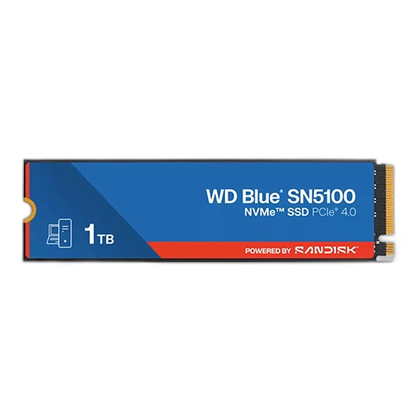
STORAGE WD Blue SN5100 1TB NVMe G...
RAM N/A

CPU N/A
GRAPHICS CARD N/A
STORAGE N/A
RAM N/A

CPU N/A
GRAPHICS CARD N/A
STORAGE N/A
RAM N/A